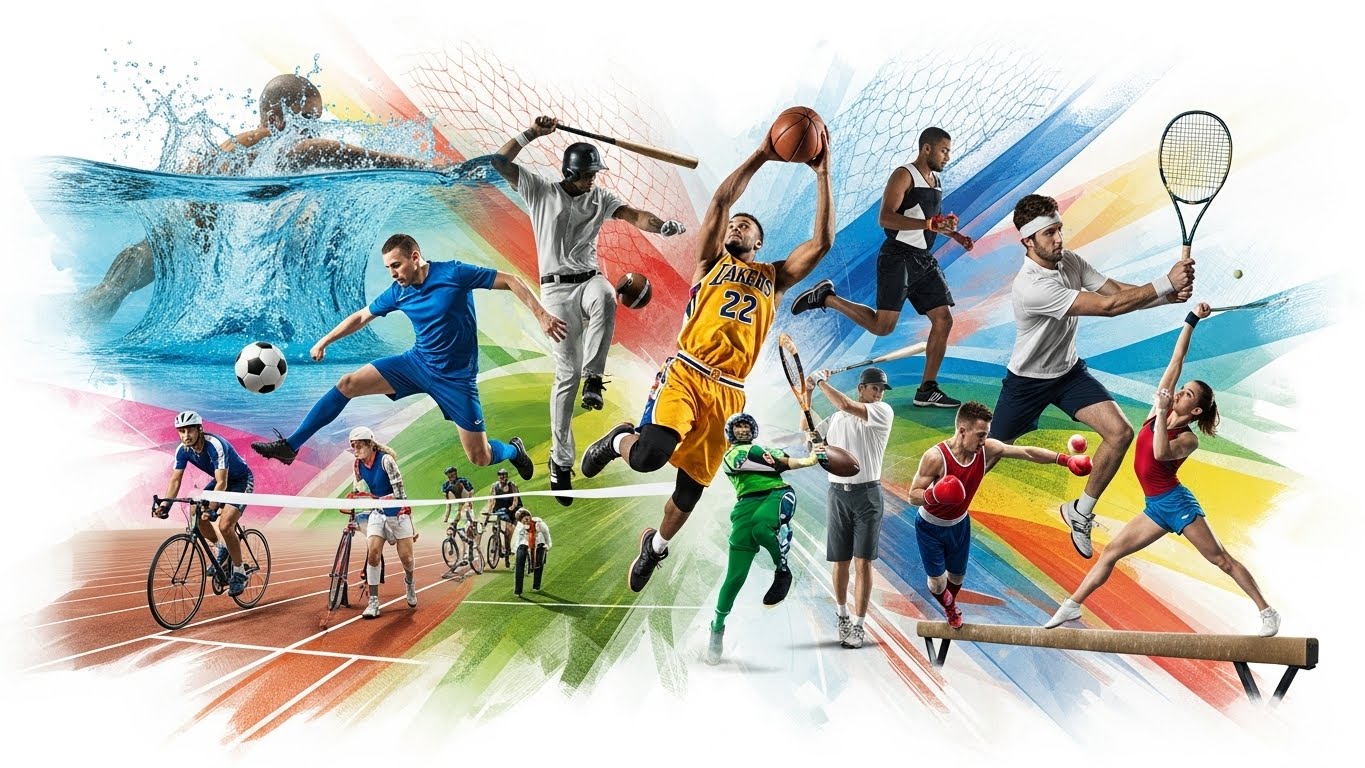
Sports have been an integral part of human culture for thousands of years, evolving alongside our societies and reflecting the values, challenges, and achievements of different eras. The history of sports is a fascinating journey, from primitive games played for amusement and survival to the highly organized, global spectacles that dominate our modern world. This blog post delves into the evolution of sports, exploring their origins, transformation, and their present-day significance. By tracing the development of sports through different stages of history, we can better understand their impact on society and their role in our lives today.
The Origins of Sport: Games of Survival and Ritual
The earliest forms of sport can be traced back to ancient civilizations, where they were primarily used as means of survival and training for warfare. These early “games” were often physically demanding activities designed to prepare individuals for combat and endurance.
Ancient Civilizations and Early Sports
In ancient Egypt, Greece, and Mesopotamia, physical contests were common, not just for entertainment, but for religious and cultural purposes. For example, the Egyptians engaged in a variety of athletic competitions, including racing, swimming, and wrestling, which were often depicted in their artwork. These activities were not just games but also forms of training for battle and the protection of their communities.
The ancient Greeks, however, are often credited with formalizing sports. The Olympic Games, which began in 776 BCE, were established as a celebration of physical excellence and religious devotion to the gods, particularly Zeus. The Games were a significant cultural event in Greece, bringing together athletes from various city-states to compete in events such as running, wrestling, boxing, and chariot racing. The Greeks introduced the idea of sports as a means of cultivating both physical and moral virtues, and this concept has persisted throughout the history of sports.
The Role of Sports in Ancient Rome
The Romans took the concept of sports to new heights, though their focus was often on spectacle rather than personal achievement. Gladiatorial combat, chariot races, and staged naval battles were central to Roman entertainment, and these events were held in large arenas such as the Colosseum. While these spectacles were brutal, they were deeply ingrained in Roman culture and were seen as a way to display power, wealth, and social order.
The decline of the Roman Empire saw a shift in the role of sports, as the Christian Church began to influence European society. Sports that were seen as too violent or pagan were suppressed, and for a period, organized physical competitions became less prominent in Europe.
The Medieval and Renaissance Eras: A Shift in Purpose
With the fall of Rome and the rise of medieval Europe, sports took on a more utilitarian role, often tied to the training of knights and warriors. Jousting, archery, and sword fighting were common forms of physical contests that served both as entertainment and preparation for battle.
Sports in the Middle Ages
During the medieval period, physical contests were often linked to the feudal system, where knights and nobility were trained for warfare. Tournaments, which included jousting, sword fighting, and archery competitions, were popular events that showcased the skills of knights and soldiers. These events were not only entertainment but also opportunities for knights to display their prowess and gain social status.
However, in medieval Europe, sports were also influenced by local traditions and customs. In rural areas, peasants would engage in folk games, such as early versions of football and rugby, where teams of individuals competed in physical contests with minimal rules. These games were more chaotic and often based on community participation rather than structured competition.
The Renaissance and the Birth of Modern Sport
The Renaissance period brought about a renewed interest in humanism, which emphasized the value of individual achievement and the development of physical and intellectual capabilities. This era saw the formalization of many sports that we recognize today. Italy, for instance, was the birthplace of several modern sports, including tennis, which was initially played by French monks in the 12th century before evolving into a more structured form.
In England, the Renaissance period saw the development of organized sports such as cricket and early forms of football. These sports would eventually evolve into the global phenomena we know today.
The Industrial Revolution: A New Era of Sports
The Industrial Revolution, which began in the late 18th century, was a turning point in the history of sports. As societies became more urbanized, industrialized, and connected, the nature of sport also began to change. With the rise of the working class and the expansion of leisure time, sports became more organized, accessible, and popular.
The Birth of Modern Sporting Leagues
In the 19th century, many of the sports we recognize today began to take shape. Football (soccer), rugby, and basketball, for example, all saw the development of standardized rules and organized competitions. Football clubs and leagues began to form, creating the foundation for the global sport we see today. The first professional football league was established in England in 1888, and the success of this model led to the creation of similar leagues in other countries.
The Rise of International Competitions
The late 19th and early 20th centuries also saw the birth of international sports events, with the revival of the Olympic Games in 1896. The modern Olympics, inspired by the ancient Greek Games, became a global platform for athletes from different nations to compete at the highest level. The Games also became a symbol of international unity, peace, and the pursuit of excellence.
The spread of sports around the world was also facilitated by the growing popularity of mass media, including radio and television. The ability to broadcast sporting events to a global audience transformed sports into a major industry and a powerful cultural force. Major sports events like the FIFA World Cup, the Super Bowl, and the Olympic Games became international spectacles watched by millions, cementing the role of sports in global culture.
The Globalization of Sport: A Modern Phenomenon
Today, sports are more globalized than ever. The rise of digital technology, social media, and global communications has made it possible for sports fans to follow their favorite teams and athletes from anywhere in the world. Sporting events have become massive entertainment spectacles, attracting millions of viewers and generating billions of dollars in revenue.
Sports and Media: A Symbiotic Relationship
The relationship between sports and media has become increasingly symbiotic. Television networks, digital platforms, and social media have revolutionized the way sports are consumed. Fans can watch games live, engage with athletes on social media, and access highlights and commentary from anywhere at any time. The financial success of sports leagues is now heavily tied to media rights deals, sponsorships, and merchandise sales, creating a multi-billion-dollar industry.
The Impact of Technology on Sports
Technological advancements have also significantly impacted the way sports are played, coached, and enjoyed by fans. From the use of instant replay in refereeing decisions to the development of advanced performance analytics, technology has revolutionized sports in numerous ways. Wearable devices track athletes’ performance in real-time, while advancements in sports medicine have allowed athletes to recover from injuries faster than ever before.
The rise of eSports, which involves competitive video gaming, is another example of how technology has expanded the definition of sport. eSports has grown into a global industry with professional leagues, tournaments, and a massive fanbase, challenging traditional notions of what constitutes a sport.
The Future of Sports: Evolving and Adapting
As we look toward the future, it is clear that sports will continue to evolve. From the increasing commercialization of sports to the impact of digital platforms and virtual reality, the sports industry is in a constant state of flux. While traditional sports like football, basketball, and soccer will remain popular, new forms of competition will likely emerge, and new technologies will change how we experience and engage with sports.
Moreover, the growing emphasis on inclusivity and diversity in sports will continue to shape the landscape. Women’s sports, which have historically been underrepresented, are gaining visibility and recognition, with increasing opportunities for female athletes to compete at the highest levels.
Sports will also continue to be a reflection of society’s values, struggles, and aspirations. They will remain a powerful tool for bringing people together, fostering a sense of community, and providing a platform for athletes to inspire change. The global nature of sports means that they will continue to transcend borders, languages, and cultures, uniting people from all walks of life through a shared love of competition and achievement.
Conclusion: Sports as a Universal Language
From their humble beginnings in ancient times to their current status as global phenomena, sports have played a central role in shaping human civilization. They have provided entertainment, fostered community, and inspired greatness. As the world continues to change, so too will the world of sports. Whether through technological innovation, new competitions, or evolving cultural values, sports will remain a powerful force for uniting people and inspiring greatness.
In the end, sports are more than just games—they are a universal language that speaks to our collective desire for excellence, connection, and achievement.
Leave a Reply