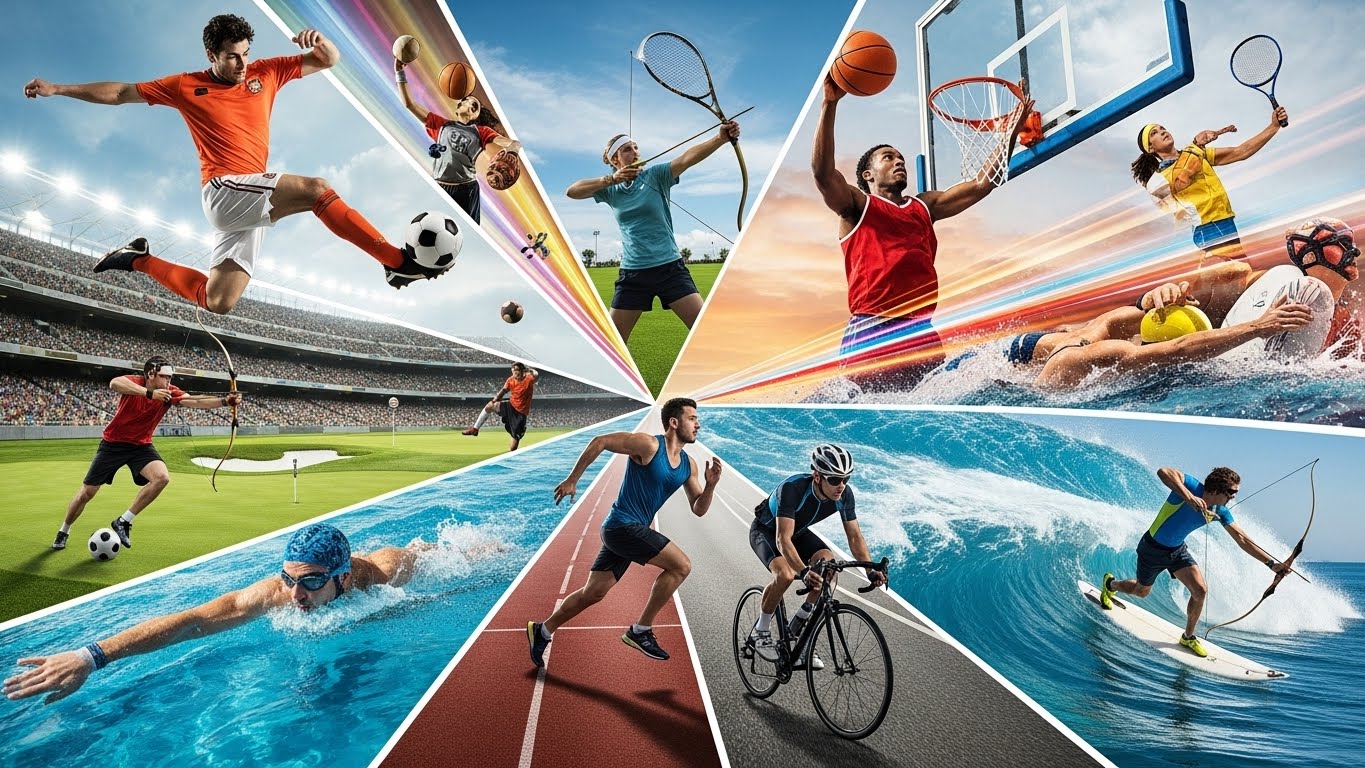
Introduction: Sports – A Universal Language
Sports have been an integral part of human culture for centuries, serving as both a form of entertainment and a way to bring people together. From the ancient Olympic Games to modern-day football tournaments, sports transcend national borders, languages, and cultures. In many ways, they act as a universal language that connects people of all backgrounds, offering an avenue for individuals to showcase their talent, for communities to unite, and for societies to celebrate their heroes.
But sports are more than just games. They represent hard work, perseverance, teamwork, and discipline. Beyond the physical competition, they teach life skills, foster community spirit, and even shape global economies. Whether you’re an athlete, a spectator, or a casual participant, the world of sports has something to offer, and its influence extends far beyond the field.
In this blog post, we’ll delve into the significance of sports in modern society, exploring how they have evolved over the years, the impact they have on individuals and communities, and their role in shaping culture, politics, and the global economy.
The Historical Evolution of Sports
Sports have existed in some form since ancient times, with evidence of competitive games dating back to the earliest civilizations. The ancient Greeks, for example, held the Olympic Games in 776 BC, where athletes competed in events like running, wrestling, and discus throwing. These games were not only a way to honor the gods but also a means of promoting unity and pride within the Greek city-states.
Similarly, ancient civilizations in Egypt, China, and Mesoamerica engaged in various forms of sport, each with its own unique set of rules and customs. The common thread, however, was that sports served as a means of physical exertion, entertainment, and social bonding.
Fast forward to the modern era, and the world of sports has dramatically transformed. While the core of athletic competition remains the same—achieving greatness through skill, effort, and teamwork—the structure and scope of sports have expanded exponentially. The establishment of professional leagues, the commercialization of sports, and the rise of international competitions have turned what were once localized activities into global spectacles.
The Rise of Professional Sports Leagues
In the late 19th and early 20th centuries, the formalization of sports leagues took shape, marking a major shift from recreational pastimes to professional enterprises. One of the earliest examples was the establishment of Major League Baseball (MLB) in the United States in 1869. This was followed by the creation of professional leagues for football, basketball, and hockey, among others.
The rise of professional sports leagues not only provided athletes with the opportunity to make a career out of their talents but also gave rise to the commercialization of sports. Advertisements, sponsorships, and ticket sales began to generate significant revenue, which further fueled the growth of the industry. Today, major sports leagues like the National Football League (NFL), National Basketball Association (NBA), and English Premier League (EPL) generate billions of dollars annually, making sports one of the most lucrative industries in the world.
These leagues are not just about the games themselves; they represent an entire ecosystem that includes media rights, merchandise, sponsorship deals, and a massive fanbase. Television broadcasts of games reach millions, and athletes are transformed into global superstars. This commercialization has also led to the global expansion of sports, with leagues and teams attracting international fans and partnerships.
The Role of Sports in Fostering Community and National Identity
One of the most powerful aspects of sports is its ability to bring people together. Whether it’s the local level or the grand stage of international competitions, sports create a sense of community and national pride. When a country’s team competes in the Olympics, the World Cup, or any other major tournament, the entire nation often rallies behind the athletes, transcending political, social, and economic divisions.
Local sports teams play a similar role in fostering community identity. Whether it’s a neighborhood soccer team or a professional club, sports create shared experiences for fans, players, and coaches alike. The stadium becomes a place of celebration, with fans expressing their loyalty through chants, songs, and cheers. These communal experiences build bonds that extend far beyond the event itself, leading to lasting connections and a sense of belonging.
On a national level, sports serve as a platform for countries to assert themselves on the world stage. The Olympics, for instance, are not only about athletic achievement but also about political and cultural expression. Countries invest heavily in training their athletes to represent them on the international stage, and success in these competitions can spark national pride and unity. The triumphs of athletes like Usain Bolt, Serena Williams, and Lionel Messi have become symbols of their countries’ cultural identity, creating a sense of pride and inspiration for people everywhere.
The Social Impact: Beyond the Game
While the excitement and thrill of competition are central to sports, their impact extends beyond the field of play. The discipline required to excel in sports teaches important life skills, such as time management, resilience, and teamwork. Athletes must not only hone their physical abilities but also develop mental toughness, learning to overcome setbacks, handle pressure, and maintain focus.
In many ways, sports provide a blueprint for success in life. The principles of hard work, perseverance, and dedication that athletes adhere to can be applied to virtually any field. These lessons are valuable not just for elite athletes but for individuals of all ages and backgrounds. Youth sports programs, in particular, play an essential role in helping children develop important character traits, such as teamwork, leadership, and discipline.
Sports also serve as a powerful tool for social change. Throughout history, athletes have used their platform to raise awareness of important issues, from racial equality to gender rights. The 1968 Olympics in Mexico City, for example, saw African-American athletes Tommie Smith and John Carlos raise their fists in a Black Power salute to protest racial injustice in the United States. In more recent times, athletes like Colin Kaepernick, Muhammad Ali, and Billie Jean King have used their status to challenge social norms, fight discrimination, and advocate for change.
Through these acts of protest and advocacy, sports have become a vehicle for social transformation, inspiring movements that go beyond the confines of the game.
The Economic Power of Sports
The economic impact of sports is undeniable. From grassroots levels to professional leagues, sports generate billions of dollars worldwide. This revenue comes from various sources, including ticket sales, media rights, sponsorships, and merchandise. Major events such as the FIFA World Cup, the Olympics, and the Super Bowl create massive economic opportunities for host cities, including increased tourism, job creation, and infrastructure development.
The sports industry also fuels ancillary sectors, such as advertising, apparel, and sports equipment manufacturing. Companies like Nike, Adidas, and Under Armour generate billions in revenue through sponsorships, product sales, and endorsements. The branding of athletes, teams, and events has become a multi-billion-dollar industry, with endorsement deals elevating athletes to celebrity status and creating new economic opportunities.
At the local level, community sports programs also contribute to economic development. Youth sports leagues and amateur competitions provide opportunities for businesses to thrive, whether it’s through the sale of equipment, food, or the hosting of tournaments. Sports tourism, where fans travel to attend major sporting events, also contributes to the economy by supporting local hospitality, transportation, and service industries.
The Globalization of Sports: Connecting the World
In recent decades, sports have become increasingly globalized, with international leagues, tournaments, and competitions attracting fans from all corners of the world. The accessibility of live sports broadcasts, the growth of digital platforms, and the increasing presence of social media have created a global fanbase for nearly every major sport.
The globalization of sports has also led to the internationalization of athletes. The influx of foreign talent into domestic leagues has added diversity and heightened competition, elevating the overall level of play. For example, the NBA has become a global brand, with players from countries like China, Germany, and Nigeria representing their nations while competing in American basketball leagues. Similarly, European football clubs like FC Barcelona and Manchester United have millions of fans in Asia, Africa, and the Americas.
This cross-cultural exchange has made sports a powerful tool for diplomacy, fostering understanding and cooperation between nations. Major tournaments like the FIFA World Cup or the Olympics bring countries together in a celebration of athletic achievement and international solidarity. The shared experience of watching and participating in these events creates a sense of global community that transcends political and cultural differences.
The Future of Sports: Evolving Technologies and New Frontiers
As technology continues to advance, the future of sports promises to be more immersive, interactive, and accessible than ever before. Virtual reality (VR) and augmented reality (AR) are already beginning to play a role in transforming how fans experience sports, with VR allowing viewers to feel as though they are sitting in the front row of a live event, even from their living rooms.
Wearable technology is also changing the way athletes train and perform. Devices like smartwatches, heart rate monitors, and performance trackers give athletes real-time feedback, helping them optimize their training and reduce the risk of injury. These innovations are not just changing the way athletes perform; they are also reshaping how coaches and teams approach strategy, player development, and game analysis.
At the same time, esports—competitive video gaming—has become a major part of the global sports landscape. Esports tournaments attract millions of viewers, and professional gamers are now recognized as athletes, with sponsorships and career opportunities comparable to those in traditional sports. This new frontier is creating new forms of competition and opening up opportunities for fans and players in the digital world.
Conclusion: Sports as a Catalyst for Change and Unity
Sports have always had the power to inspire, unite, and transform. Whether it’s on the field or off, sports have a profound impact on individuals, communities, and nations.
Leave a Reply